Building an Audience Before Working in Sports Media - The AllBall Podcast
An independently produced basketball podcast where I developed the editorial instincts that continue to shape how I approach YouTube today.
Overview
Before working professionally in sports media, I wanted to create something of my own.
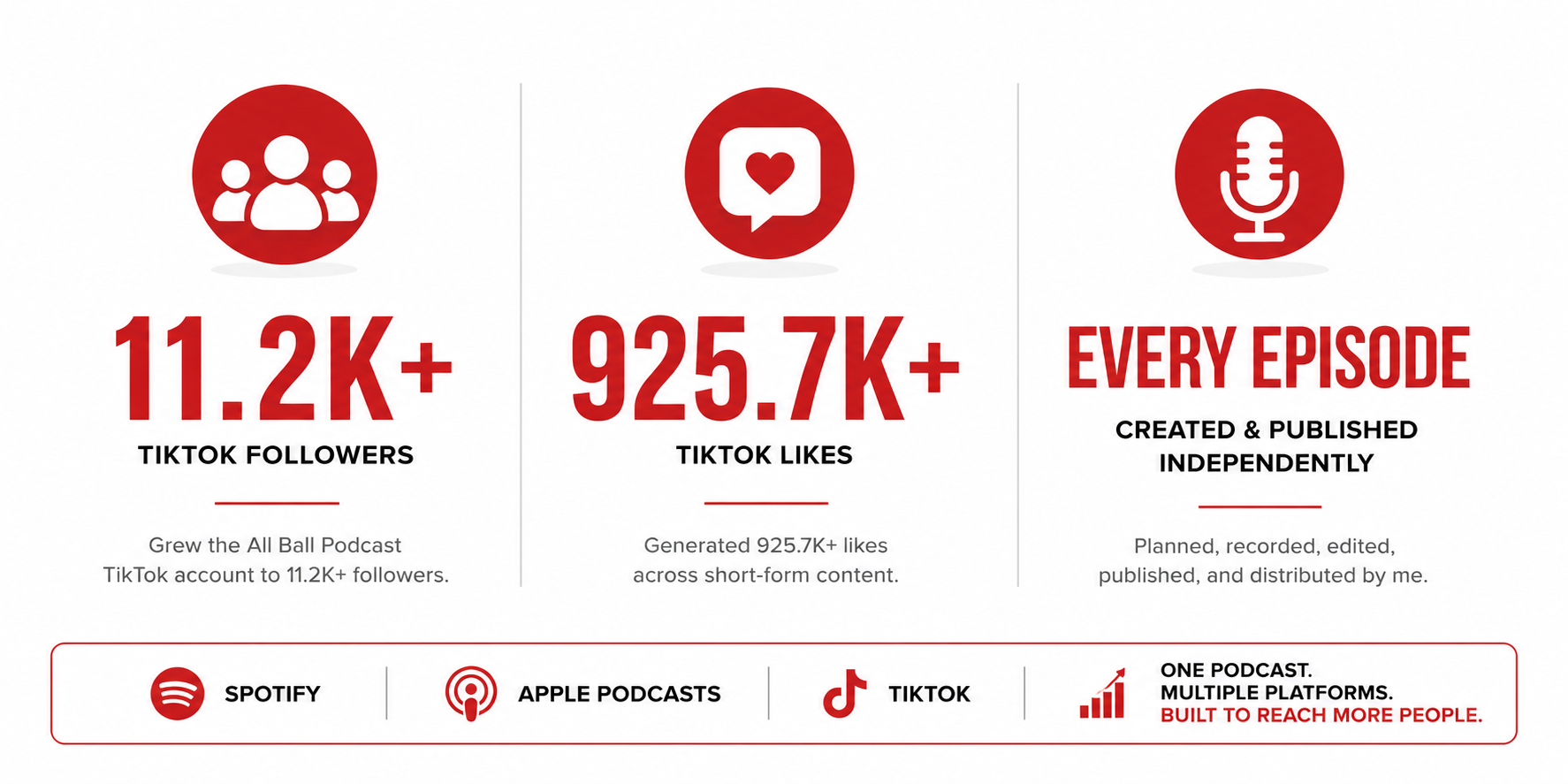
The All Ball Podcast became an opportunity to learn every part of the content process, from planning weekly discussions and hosting conversations to editing episodes, publishing them across platforms, and creating short form content designed to reach new audiences.
Over time, the project became less about producing a podcast and more about understanding what made people stop scrolling, keep watching, and share content with others. Those lessons ultimately helped me land my first role in sports media with Spotlight Sports Group.
The Challenge
Long form conversations naturally contain valuable moments, but they rarely arrive in a format that's ready for social media.
The challenge wasn't simply clipping interesting soundbites.
It was identifying the moments that could stand on their own, creating context without the full conversation, and packaging them in a way that encouraged people to stop scrolling.
Every clip had to feel complete even if viewers had never heard the podcast before.
My Role
Production
Editorial planning
Hosting
Remote production
Video editing
Audio editing
Podcast publishing
Post Production
Short-form editing
Social packaging
Performance analysis
Distribution
Representative Work
Every short-form clip began as a longer discussion. The full podcast demonstrates the conversations that became the foundation for the clips featured below.
Featured Clips
Although the original TikTok account has since been rebranded, these archived examples demonstrate the editorial approach used to transform long form conversations into short form content.
Key Takeaway
The biggest lesson from this project wasn't how to produce a podcast.
It was learning that successful short form content begins long before the edit.
The most important decision isn't where to cut the clip. It's recognizing which moments deserve to become clips in the first place.
That experience fundamentally changed how I think about editing. Rather than asking what happened, I started asking what people would actually choose to watch.
Those editorial instincts continue to shape how I approach YouTube production today.
Results
My Process
🔎 Find the Moment
Every episode contained dozens of potential clips. I looked for moments that sparked curiosity, disagreement, humor, or strong opinions rather than simply summarizing basketball news.
🧩 Build Context
Most clips were viewed by people unfamiliar with the podcast. My edits focused on creating enough context within the first few seconds for the conversation to stand on its own.
Titles, captions, pacing, and visual presentation were designed around encouraging viewers to stop scrolling without relying on misleading hooks.
📦 Package for Discovery
Performance informed future editing decisions. I tracked which types of conversations, pacing styles, and hooks consistently generated stronger engagement and used those observations to refine future clips.